The Part Nobody Puts on a Postcard
When people picture archaeology, they usually picture the moment of discovery: a hand brushing dirt from a bone, a coin catching the sun, someone kneeling in a pit with a look of wonder on their face. I understand why. That moment is real, and it is wonderful. But it is also about five percent of what actually happens to an object between the ground and the glass case.
The other ninety-five percent happens at folding tables under a tent, or in a converted garage, or at a sink with lukewarm water and a toothbrush that has seen better days. I have spent more hours of my career doing this quiet, repetitive work than I have spent doing anything that looks like the movies, and I would not trade it. This is where I actually get to know what we found.
Step One: Out of the Bag, Into the Light
Every find leaves the excavation unit in a labeled bag, usually with a tag noting the layer, the square, and the date it was recovered. That tag is not paperwork for paperwork’s sake. Without it, an object is just a pretty thing with no story. With it, we can reconstruct exactly where it sat in the ground relative to everything around it, which tells us far more than the object alone ever could.
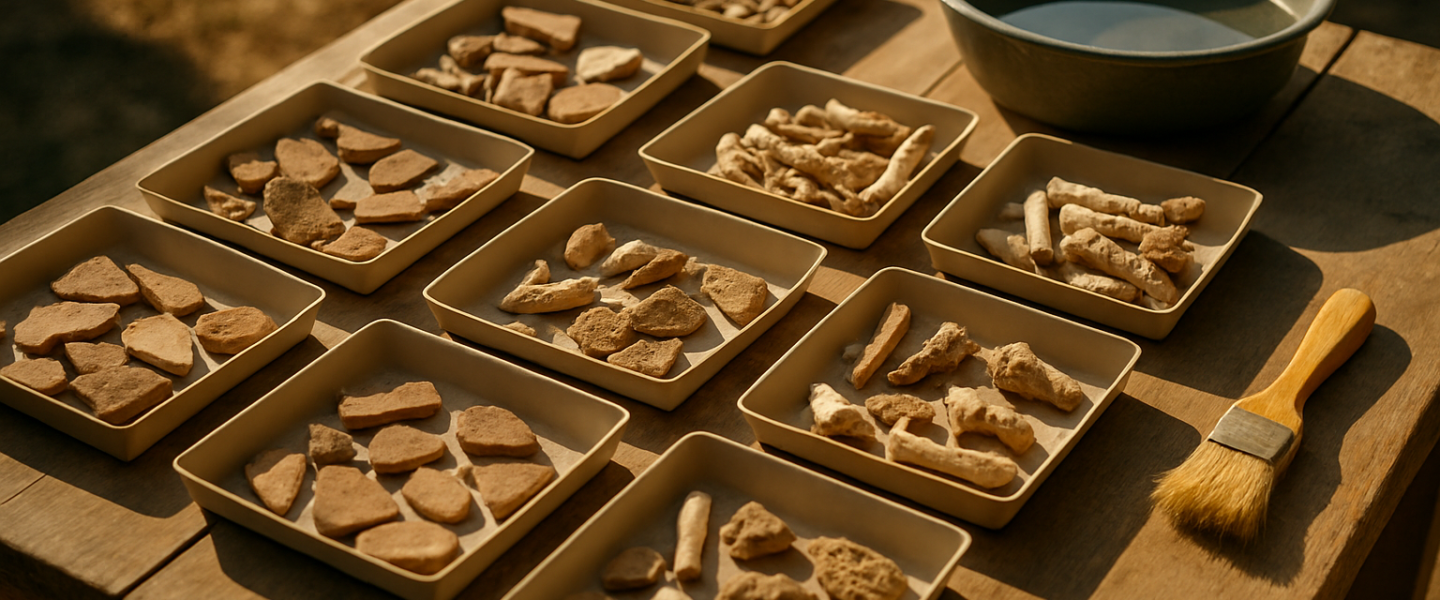
The first job in processing is sorting these bags by material, because stone, bone, ceramic, and metal all need different handling from the very start. Some materials can tolerate a gentle rinse. Others will crumble if you so much as look at them wrong with a wet sponge.
Why We Sort Before We Clean
- Bone and shell are often fragile and porous, and too much water can actually damage the surface or wash away residues we might want to study later.
- Metal frequently needs to stay dry entirely, since moisture can speed up corrosion that has already started underground.
- Ceramic and stone are usually the most forgiving and can often be washed with nothing more than water and a soft brush.
Washing: Slower Than You Would Think
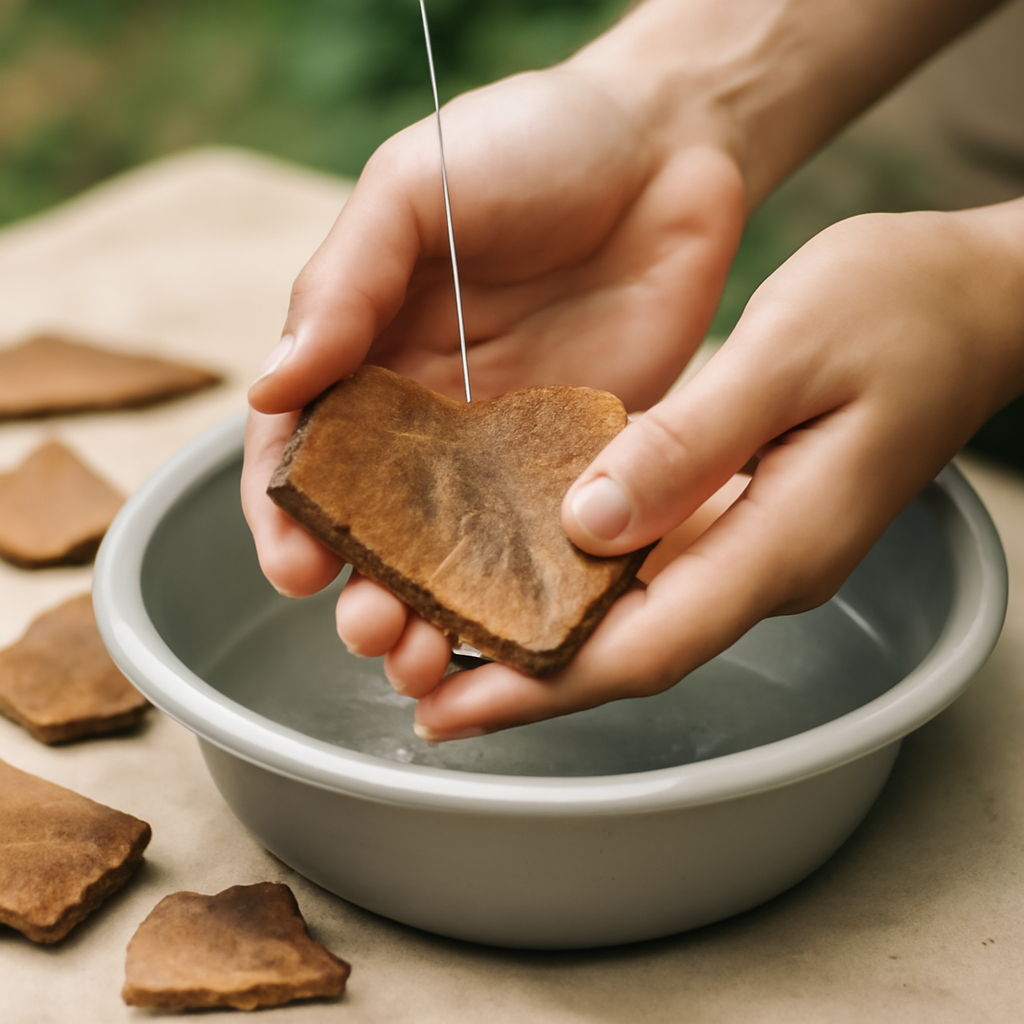
Washing finds sounds like it should take a few minutes per object. In practice, it is closer to meditation. You hold a sherd of pottery under a trickle of water, turning it in your fingers, feeling for soft spots, looking for any hint of paint or glaze that might wash away if you scrub too hard. You learn the texture of a thousand-year-old cooking pot versus a fine serving bowl just by how the clay feels under your thumb.
This is also when the first real observations happen. Someone on the team might notice a rim shape that matches something from another trench, or a tool mark that suggests how a vessel was made. These small comments, tossed across the washing table, often end up shaping the questions we ask once the season is over.
Drying and the Problem of Patience
Once washed, finds need to dry fully before they go anywhere near a storage box, because trapped moisture invites mold and encourages salts to crystallize inside porous materials, which can cause cracking. This usually means spreading objects out on trays, in shade if the climate is hot, and simply waiting. There is no shortcut here. Rushing this stage is one of the fastest ways to damage something that survived thousands of years in the ground only to be ruined in a week of careless storage.
Labeling: Tiny Letters, Enormous Responsibility
Every object that is sturdy enough gets a small, reversible label written directly on it, usually in a specific spot that does not interfere with any decorated surface. The label typically includes a site code and a catalog number, written in a particular order that lets anyone, years later, trace that object straight back to its context.
I know it sounds like a small, fussy detail, but this is one of the most important things we do all season. An unlabeled artifact in a drawer is essentially an orphan. It might be beautiful, it might be rare, but without its context it cannot tell us much about the people who made and used it.
What Goes Into a Catalog Entry
- A description of the material, shape, and any decoration or markings
- Measurements, so researchers elsewhere can compare objects without handling them directly
- Condition notes, flagging anything fragile or already damaged
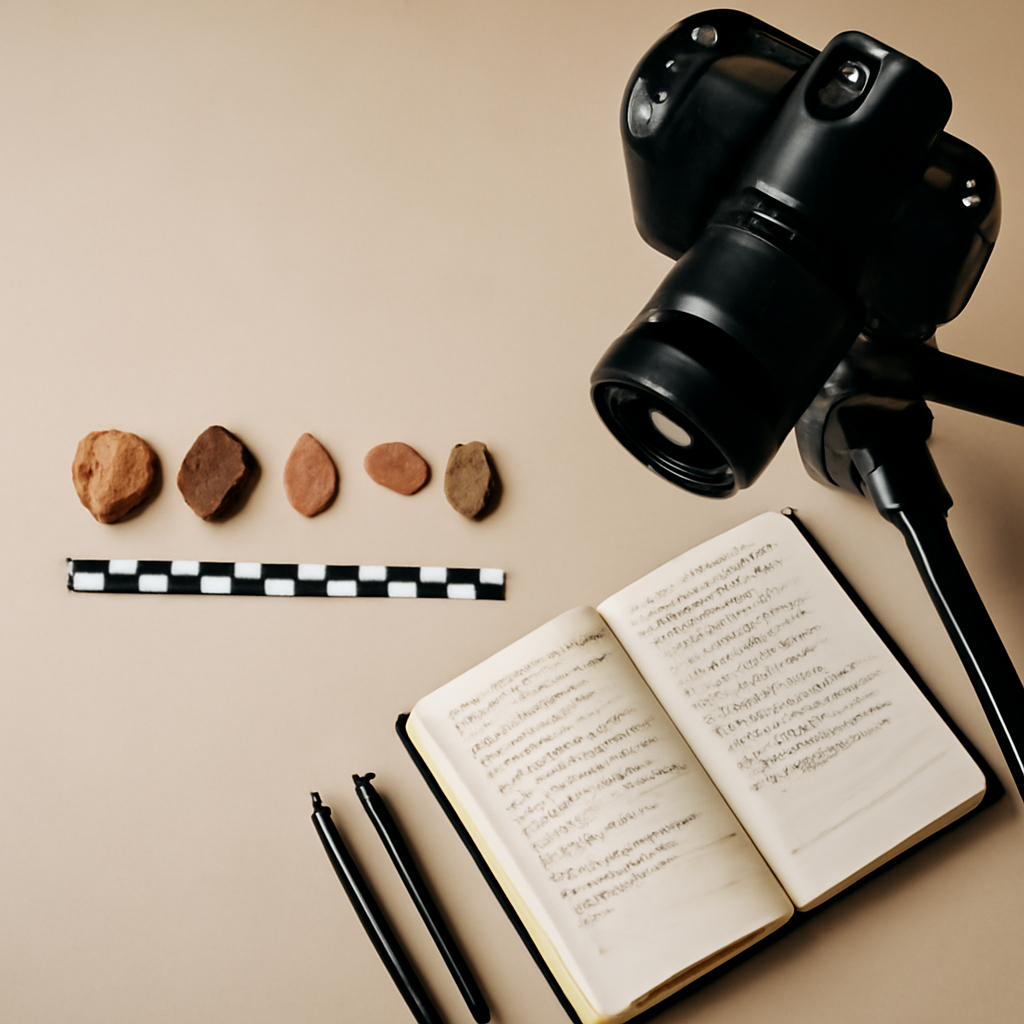
- Photographs, usually taken against a plain background with a scale bar for reference
Storage: Boring, Essential, Permanent
After cataloging, finds go into storage boxes or bags suited to their material, often with acid-free tissue or padding to keep them from shifting and knocking against each other. This stage rarely gets photographed, but it is the quiet decision that determines whether an object will still be in good condition for the next generation of researchers to study, or for a future exhibit to display.
I like to think of finds processing as a kind of translation work. We take something pulled from silence, strip away the dirt that has hidden it for centuries, and give it a vocabulary, a number, a home, so that it can be understood by anyone who comes looking later, whether that is next month or in fifty years.
A Different Kind of Satisfaction
There is no dramatic music playing when you finally close a box of properly labeled pottery sherds. Nobody claps. But there is a particular satisfaction in knowing that you have done right by an object, that you have given it the careful handling it deserves after surviving so long underground. That, to me, is just as much archaeology as the moment of discovery itself, even if it never makes it onto a postcard.